
Exclamation points, instead of arousing interest in your subject, can kill your audience's enthusiasm. Build interest with well-chosen, compelling words instead.
What’s Left Behind: Chinese Lanterns
What's Left Behind is an occasional series of images of accidental leftovers.
For Heaven’s Sake, Tell a Story
How two Galileo's inspired storytelling, and why it's good business to craft copy that makes people listen and care.
You Can Have Ideals AND a Brand
A recent article in the NY Times about branding your psychotherapy practice sent readers into despair over what they saw as a selling out and a ruining of the profession. They questioned the author’s quick fix solutions and her training and commitment. I might not have panicked as the author did after only three months with no clients, but most readers didn’t see themselves as business people. As if that would diminish the care they delivered.
Branding, at its core, is defining in a deliberate way what differentiates you from others, making it easier for people to find you and make informed decisions about buying your product or service.
Branding, by itself, doesn’t compromise ideals; at its best, it reinforces them.
People in professions driven by ideals can suffer from viewing their services as too precious to be tainted by deliberate business activity.
But in the case of therapists, in order to heal, they have to get people in the door. The care starts before a client walks through the door by making it easier for them to find and choose the best person to work with. The challenge then is to describe who you help and what your philosophy is in their terms, not yours.
The resistance is understandable.
A fear of new territory.
A fear of more work.
A fear of taking a stand.
It’s far easier to think your work should speak for itself. But if you really help people through your work, you have to put your ideals to work in ways you hadn’t considered before.
The Other Intelligent Design, or Rocks that Rock
I feel entitled, once in a while, to veer of the subject of the business of design and branding to cover one of my two loves—nature and food. Who knows how a rock or a shell or the pattern of seeds inside a cut piece of fruit will wend their way into that magazine layout or logo design? You just trust that what inspires you will work its magic at some point in the future.
Many designers I know are obsessed with rocks. The closest I’ve come to making sense of it is that rocks, with their smoothness, a wild streak of mineral deposit, surface pocked with teeny holes or perfectly oval shape, resemble the best intentionally designed objects, only they are accidents of the magic forces of nature.
_______________
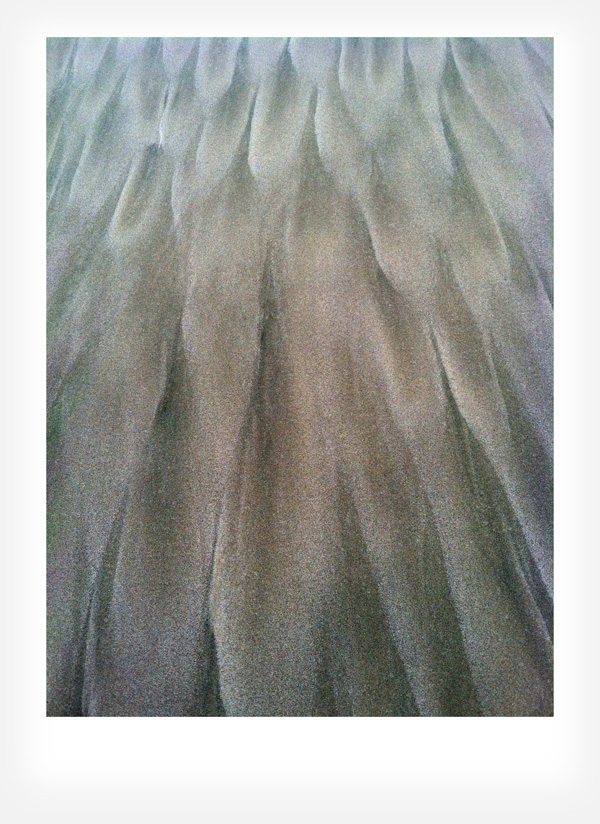
Once such place where the forces of nature collide is Ona Beach on the central Oregon coast. Basalt rocks, both teeny and gigantic, have been sculpting this patch of coast for eons, creating an other-worldly landscape. You have to be here at low tide to be rewarded.




Upcycled Eyecandy: The New Keen Store
Needing an antidote to days of focused computer work, I took a partial inspiration day starting with a visit to the new Keen Garage store in Portland’s Pearl district, followed by a trip to the Portland Japanese Garden to see maples dusted with snow. The new, more visible store location allows passersby to visit this sustainable gem of a store that puts to clever use reclaimed materials and objects. The result is a playful, industrial-meets-vintage-meets-upcycled-meets-woodsy environment.


Repurposed oil drum furniture with cushions made from a patchwork of old car seat fabrics.


No beer sampling since it was only 10 a.m.

One of many charming woodsy installations filled with the popular air plant tsillandia.

Windows and door frames become shelving systems for plants, socks and other merchandise.
Fortunately, I left the store without a dent in my credit card.